
However Big the Struggle, Success Can Be Bigger — Nirmala Bhuria
Special interview: Madhya Pradesh's Women and Child Development Minister Nirmala Bhuria on care leavers, the Mukhyamantri Bal Ashirwad Yojana, Mission Vatsalya and the department's MoU with AIIMS Bhopal.
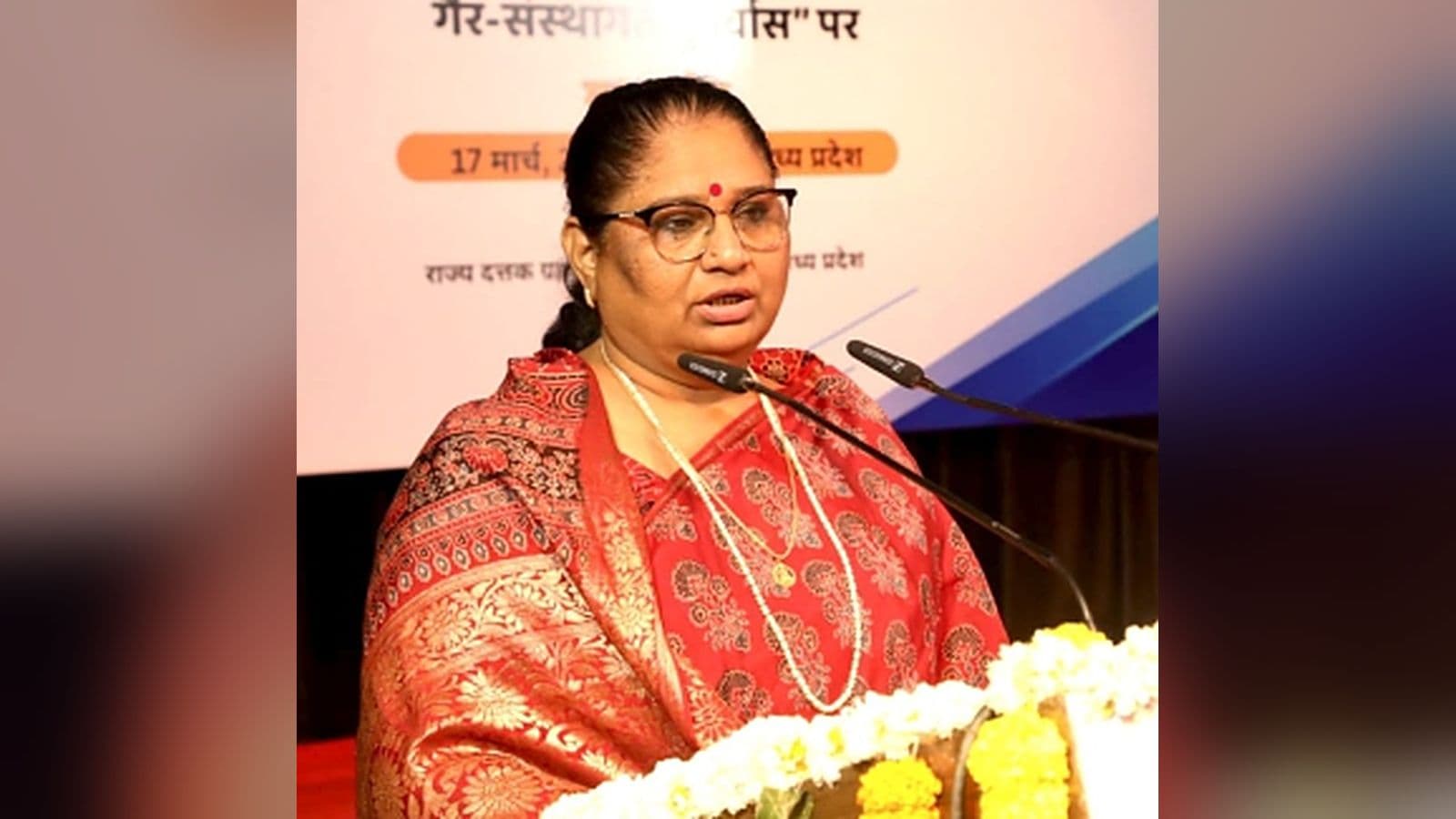
Women and Child Development Minister Ms Nirmala Bhuria has said that children leaving child-care institutions, and care leavers, are not merely victims of circumstance but the architects of their own future. The government's effort is that no child, after leaving the protection system, should feel alone, but should instead make a place for themselves in the mainstream of society, with opportunities for education, skills, employment, dignity and self-reliance. In her words, “However big the struggle, success can be bigger still.”
Recently the Department of Women and Child Development, in collaboration with Catalysts for Social Action (CSA), organised a workshop on children in child-care institutions and care leavers. There, Minister Bhuria spoke about the government's commitment. She said that however big the struggle, success can be bigger, and expressed her views in many other ways too. Here are the key excerpts of our conversation with Ms Bhuria on various issues.
Q: For children in Madhya Pradesh who have no one to look after them, what scheme do you have to help them? Please tell us in detail about care leavers.
A: Through the efforts of Chief Minister Dr Mohan Yadav and the Mukhyamantri Bal Ashirwad Yojana, an important initiative is under way to secure the future of children and young people coming out of child-care institutions. Work is being done to simplify the scheme and widen its scope so that as many children and young people as possible can benefit, and receive the support they need for education, skills, employment, self-employment and an independent life. Through Mission Vatsalya, the government is committed to ensuring that no child is limited to mere protection, but receives the full right to dignity, opportunity and self-reliance.
Q: What role do care leavers play? How is this monitored in the state, and what are the plans for the coming days?
A: My effort is that care leavers are recognised not by their past but by their resolve and their achievements. However big the struggle, success can be bigger. Children leaving child-care institutions, and care leavers, are not merely victims of circumstance but the makers of their own future. The government's effort is that no child, after leaving the protection system, should consider themselves alone, but should make a place in the mainstream of society with opportunities for education, skills, employment, dignity and self-reliance. Madhya Pradesh's care leavers, through their hard work and talent, are making a name not only in the state but across the country and abroad. She said she feels proud to see her children in army uniform. The achievements of these young people show that, given opportunity and the right guidance, circumstances cannot block anyone's path to success.
Q: What other plans does the Women and Child Development Department have for such children? How will they be connected with employment after their education?
A: The aim is that these children become young people who create jobs, not just seek them. That is why the youth have been urged to stay united and help their peers. A young person who gets a job opportunity should help their other companions move ahead too. It is good that you get employment, but it would be even better if you reached a position where you give employment to others. The scope of the Mukhyamantri Bal Ashirwad Yojana is growing.
Q: What is the plan to nurture the skills of children under the Mukhyamantri Bal Ashirwad Yojana? What is the department doing, and how are they being connected with livelihoods?
A: The emphasis is on linking children's skills with the market. Jute bags, artworks and other products made by the children are being exhibited. While appreciating their talent, the focus is on connecting these products with the market and providing opportunities for self-employment and entrepreneurship. Merely training children in skills is not enough; work must also be done to link their skills with the market and make them financially independent. That is why there are also plans for internships and job opportunities with industrial establishments and various institutions. Career guidance, future action plans, mental health and emotional needs are being discussed with experts.
Q: What is CSA's role, and how is inter-departmental coordination working? Please tell us about that as well.
A: CSA's efforts in the field of after-care services are commendable. Better coordination between the Women and Child Development Department and CSA is creating new opportunities for care leavers. The efforts of the entire team, including CSA's CEO Ms Smita Shetty and Executive Director Ms Shweta Modi, are praiseworthy. During departmental visits there is dialogue with care leavers, and it is heartening to see their energy and enthusiasm to move forward and achieve their goals. Through the Women and Child Development Department, the government is fully committed to guiding and supporting care leavers and building them a bright future.
Q: What is the plan to give new momentum to women's empowerment schemes? How is work proceeding under the new set-up? Please give some details.
A: Instructions had been given to reshuffle the officers' set-up. This is an important administrative initiative by the government to speed up programmes related to the empowerment and protection of women and children. That is why instructions were given for immediate action to arrange, transparently and smoothly, the posts of Class II gazetted officers — that is, block-level Women Empowerment Officers. Given the department's ever-expanding scope and the need to implement new schemes effectively, the role of field staff becomes extremely important. Even after the merger of the Integrated Child Development Services and the Directorate of Women Empowerment, there has been no reduction in the scope of schemes; rather, several new welfare schemes have been launched. In line with the Chief Minister's intent, effective use of field staff is a priority of the state government, so that supervision and implementation on the ground can be strengthened further.
Q: What is the arrangement for the new set-up and for deputation? How has it been adjusted?
A: Under this plan of administrative restructuring, the posts of block-level Women Empowerment Officers have been included in the set-up of directorates, women and child protection institutions, divisional and district offices, regional coordination offices and training centres. In addition, provision has been made to reserve certain posts for deputation in various commissions and corporations as required. The officers concerned have been clearly instructed to complete the process of replacement of posts, reservation for deputation and inclusion in the set-up as early as possible.
Q: What have been the far-reaching effects of reviewing the recruitment rules in the Women and Child Development Department?
A: To make the department more efficient, orders had also been given to review departmental recruitment rules and streamline the departmental set-up. Administrative experts believe this step will not only improve departmental coordination, but that stronger monitoring at field level has led to more effective, positive results in key programmes such as malnutrition control, child protection and women's empowerment.
Q: What is the AIIMS technique for improving maternal and child health in Madhya Pradesh, and how has it helped?
A: An MoU has been signed between the Women and Child Development Department and AIIMS. Under it, special training for frontline workers has begun. The whole picture of maternal and child health services — from tribal areas to remote villages — is set to change. Through the MoU between the department and the All India Institute of Medical Sciences (AIIMS), Bhopal, frontline workers will directly benefit from AIIMS's high-tech methods and expertise. Instructions have been given to finalise this partnership. She said that Anganwadi workers will receive special clinical training from AIIMS specialist doctors to accurately identify severe malnutrition and treat it quickly.
Q: How are data-driven decision-making and the empowerment of frontline workers taking shape? Please tell us about this too.
A: Chief Minister Dr Mohan Yadav is fully committed to better health and complete nutrition for children and women. The technical expertise of AIIMS Bhopal will give new strength to our frontline workers and Anganwadi centres, enabling precise, data-driven decisions at the policy level. The MoU has been signed between the Women and Child Development Department and the ‘State Centre of Excellence’ and ‘State Technical Support Unit’ run under the Department of Community and Family Medicine at AIIMS Bhopal. Under this partnership, specialist doctors and the technical team of AIIMS Bhopal are giving special technical and medical training to Anganwadi workers, supervisors and project officers.


