Ideology Sacrificed for Power
The Shiv Sena-NCP-Congress government in Maharashtra is a glaring example not only of the end of ideology in Indian politics, but of political ambition overpowering ideology.
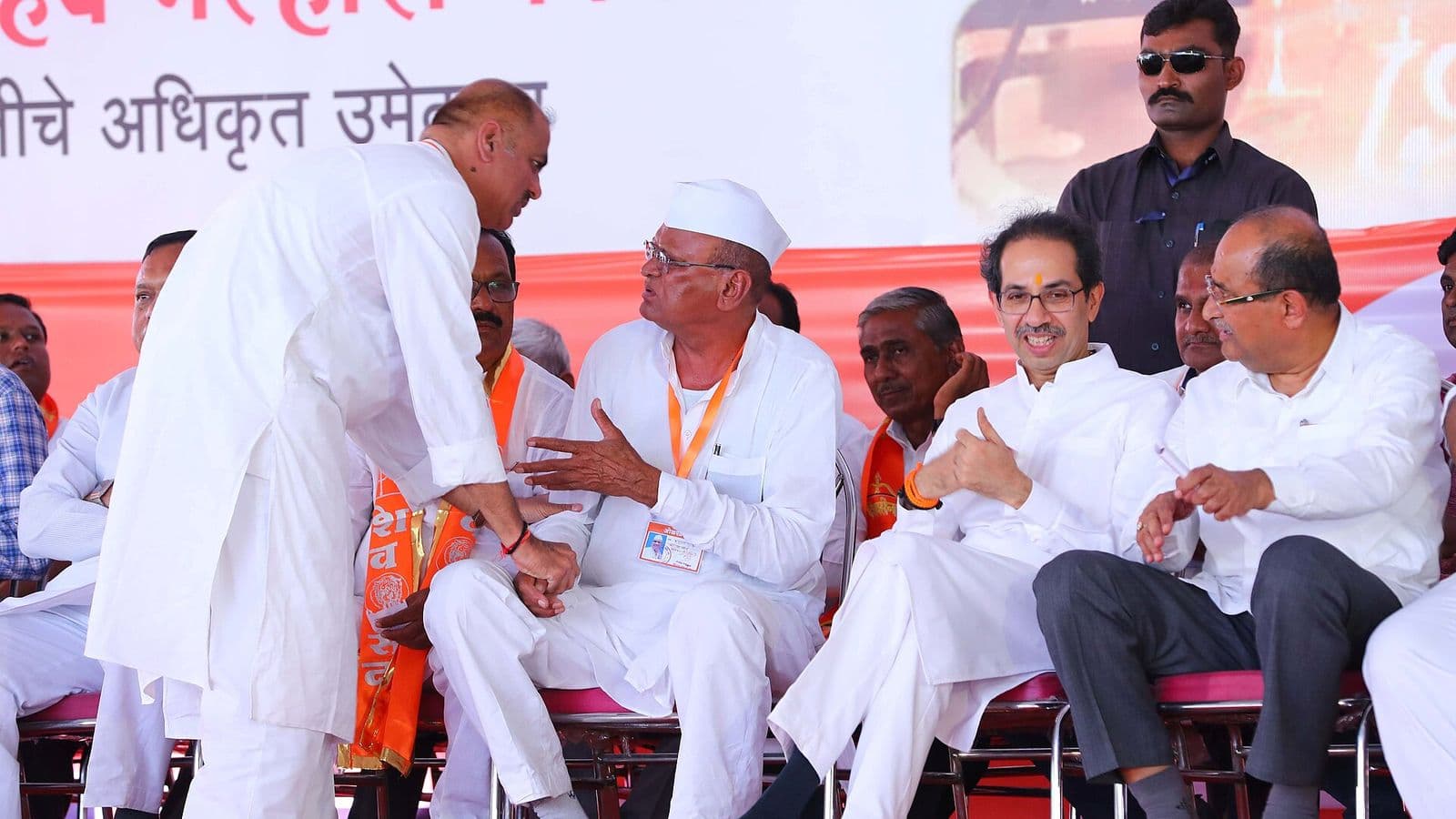
In Maharashtra, a Shiv Sena-NCP-Congress coalition government led by Uddhav Thackeray has finally been formed. It is a glaring example not only of the end of ideology in Indian politics, but of political ambition overpowering ideology. Until yesterday, the Shiv Sena and the Congress-NCP stood at two opposite poles of ideology. The Shiv Sena was known as a hard-line Hindutva, right-wing party, while the Congress and NCP were seen as left-of-centre. The two sides had serious ideological differences, yet today, for the sake of power, both poles have set those differences aside and joined hands.
Only time will tell how long this experiment lasts, but it is certain that all three parties will pay a price for it. The Congress tried a similar experiment some time ago with the JD(S) in Karnataka and with the Samajwadi Party in the Uttar Pradesh assembly election, and the results were disastrous for it. The SP and BSP repeated the experiment in Uttar Pradesh in the 2019 Lok Sabha election, and both lost.
It is said that the public has a short memory, but it is not so short that people completely forget the serious mistakes of political parties and politicians. That is why governments often change at elections. Ideology is the soul of politics. Parties that have declined, or are declining, in Indian democracy should understand where they are going wrong. After all, voters need some solid basis on which to distinguish one party from another.
The Shiv Sena does not seem to realise what price it will pay in future for abandoning its ideological ground. Its supporters will certainly feel uneasy: the battle of principle they fought against the Congress and NCP for decades has been washed away. Why would such people not be drawn to the BJP, where they will feel ideologically more at home? The Congress will meet the same fate as the Shiv Sena. What has the Congress not lost nationally by joining the Shiv Sena government in Maharashtra? How can a party that regards the BJP as its arch ideological rival join hands with the Shiv Sena, a more aggressive version of it? Either the Congress was wrong earlier, or it is wrong now.
The Shiv Sena is a regional party with limited interests, but the Congress should have thought of its larger national interest. In coming elections, will the Congress have any ideological basis for opposing the BJP? If the ideology is the same, the policies, decisions and programmes will also be the same. Then what change or benefit will people get by changing the party in power?
Harvard scholar Daniel Bell said in his book 'The End of Ideology' that development, not ideology, plays the key role in building a country's advanced socio-economic structure. According to him, all ideologies agree on political questions such as the welfare state, decentralisation of power, a mixed economy and pluralism. Another American scholar, Francis Fukuyama, took this further, arguing that ideologies have not ended; rather, in the contest of ideologies, the right-wing ideology has won a complete, final and lasting victory, and it is this ideology that will guide humanity in the future.
Seen this way, the fact that Uddhav Thackeray became Chief Minister even though the right-wing Shiv Sena won very few seats confirms the predictions of Daniel Bell and Fukuyama. Despite contesting the election together, the Congress and NCP had to bow before the Shiv Sena. In doing so, they have made their own ideology irrelevant.