Direct Financial Help to Students: An Alternative
Despite huge public spending, the quality of government schooling remains poor. If the money now spent sustaining government teachers went straight to students as vouchers, children would secure their right to education and schools would improve.
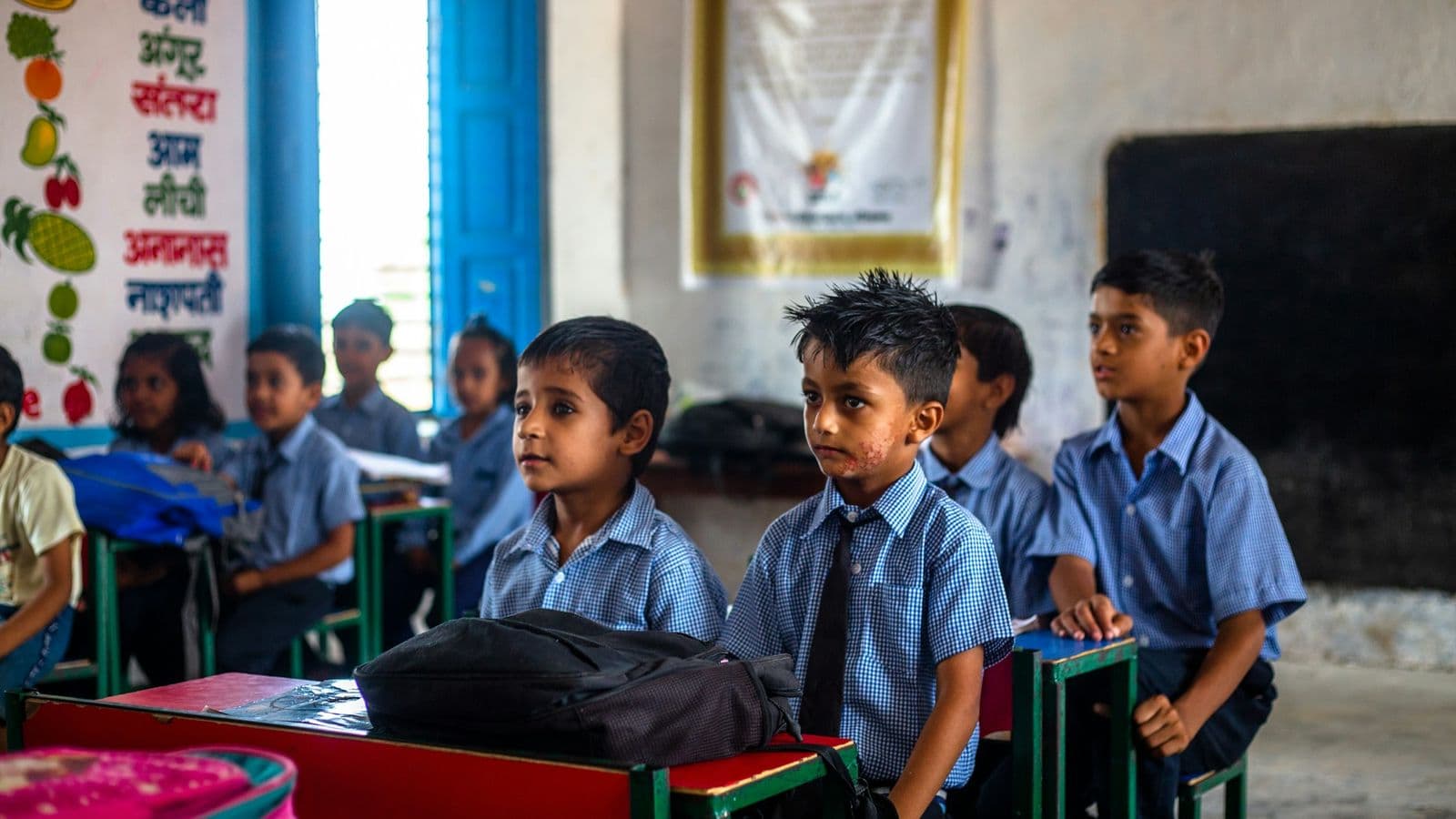
Many analysts believe that education is the single most important factor in strengthening India's economy in the years ahead. The coming era will be one of new technologies. If our young people can invent new technologies, India will move ahead; otherwise we will keep falling behind. To inspire our youth in this direction, reforming primary education matters most. That is where the foundation of young people is laid, yet that is exactly where things are in a sorry state. Students have no interest in learning, because their only aim is to obtain a high-school certificate so that they can apply for a government job.
Teachers, too, have no interest in teaching, because their jobs are secure and, under the political pressure of their unions, no government is willing to take tough steps. Reforms such as biometric attendance have ensured that teachers reach school, but the basic state of education remains as weak as before. You can lead a horse to water, but you cannot make it drink.
Some time ago I had the chance to visit the government inter college in Faizabad where I had studied. In the 1960s it was the best school in the district, and our teachers taught with dedication. Today I saw that students attended class only until midday so that they could get the midday meal. After that both students and teachers left the school, and the same students then paid large sums to take tuition from the same teachers outside. In other words, the teachers are capable of teaching but have no interest in teaching at school. And because they do not teach at school, students are forced to study from them at tuition centres. Whatever the intention behind schemes such as the midday meal, the reality is that they draw weak students into government schools, where they receive poor-quality education.
What is more, these government teachers earn about fifty thousand rupees a month, while teachers in comparable private schools earn a mere ten thousand. Even so, private schools produce better results than government schools, which shows that the root problem is government teachers' lack of interest in teaching. Despite government efforts in this direction, there have been no meaningful results. The principal of this very school told me he had asked teachers to tell and explain the day's news to students every morning, but the teachers showed no interest.
Yet the government continues to spend huge sums on education. In 2017-18 Uttar Pradesh spent ₹50,142 crore on primary education. The state has 3.8 crore children of school-going age. If, instead of paying government teachers, this amount were given directly to students, each student could receive ₹14,547 a year, without adding a single rupee to the government's burden. With this money students could pay the fees of any tuition centre or school of their choice. At present the money goes not to education but to teachers, and there is a big gap between the two. The government could even earn good money by leasing the vast land and buildings of government schools to private schools, while students' right to education would remain protected.
The National Sample Survey found that in 2014, half of the country's primary schools charged fees below ₹417 and half charged more. This is called the median, and we can treat it as the typical school fee in the country. Today that fee would be about ₹800 a month, or ₹9,600 a year. If every school-age child in Uttar Pradesh were given ₹14,547 a year, they could pay their fees from it.
Such vouchers would create competition among schools. Every school would have to improve the quality of its teaching so that more students enrol and it can claim money from the government through those vouchers. Countries around the world have found that competition improves the quality of education. So, rather than struggling to extract work from government teachers, the government should solve the root problem of their inaction. The money that today goes to sustaining government teachers should be given directly to students; that way children will secure their right to education and its quality will also improve.